
Stress Management Services for Better Mental Health
Stress is a natural part of everyday life. People may experience pressure because of work, studies, family responsibilities, financial concerns, relationships, or unexpected changes. A small amount of stress can sometimes encourage us to complete important tasks, but ongoing or overwhelming stress can affect emotional well-being, concentration, sleep, relationships, and daily routines.
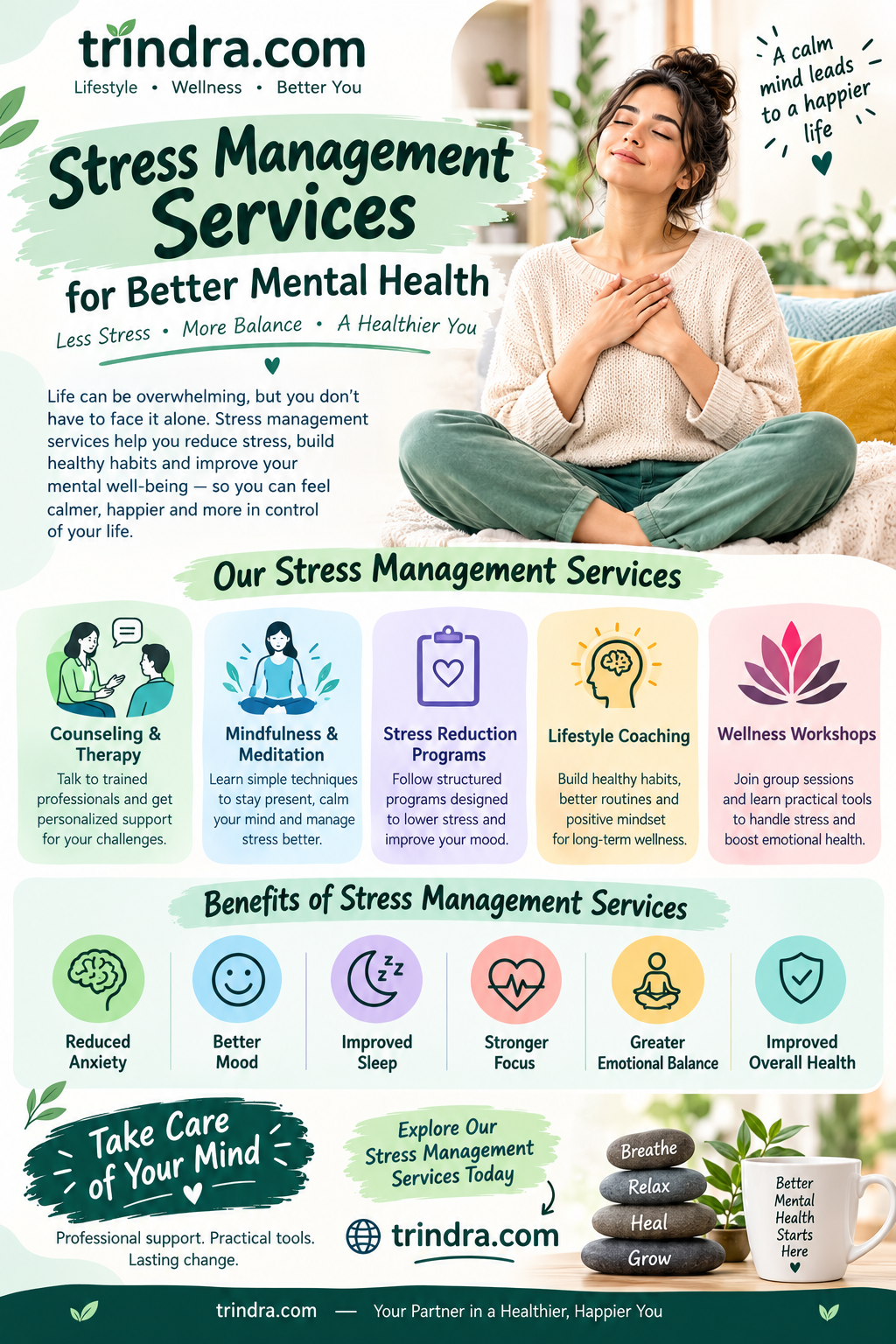
This is where stress management services can provide useful support. These services can help people understand their sources of stress and learn healthier ways to respond to difficult situations. Depending on individual needs, support may include counseling, mindfulness, relaxation techniques, lifestyle guidance, and practical coping strategies.
Understanding your own reactions is also an important part of stress awareness. When you recognize your triggers and notice changes in your thoughts, emotions, or behavior, you can take steps to manage pressure before it becomes more difficult to handle.
What Are Stress Management Services?
Stress management services are professional or structured forms of support that help people understand and manage stress in healthier ways. They may be provided by qualified counselors, therapists, mental health professionals, or other appropriate healthcare providers.
The purpose is not to remove every stressful situation from life. Some challenges cannot be avoided. Instead, the focus is on developing practical skills that can make stressful situations easier to handle.
Depending on the individual, support may focus on:
- Identifying personal stress triggers
- Developing healthy coping strategies
- Improving daily routines
- Practicing relaxation techniques
- Managing anxious thoughts
- Improving time-management habits
- Developing emotional awareness
- Building supportive lifestyle habits
Professional support can also help individuals understand when normal stress may be developing into a more serious concern.
Understanding Common Stress Triggers
Stress can come from a single major event or from several smaller problems that gradually build up. Everyone has different triggers, so understanding your own patterns can be an important first step.
Common triggers may include academic pressure, demanding work schedules, relationship difficulties, financial concerns, lack of sleep, major life changes, or having too many responsibilities at the same time.
Keeping a simple record of stressful situations can help you notice patterns. For example, you might discover that stress becomes stronger when you are tired, skip meals, have an overloaded schedule, or spend too much time dealing with stressful information online.
Recognizing Early Warning Signs
Stress can affect people mentally, emotionally, and physically. Some people may become more irritable, while others may find it difficult to concentrate or relax.
Possible signs include:
- Feeling constantly worried
- Difficulty concentrating
- Changes in sleeping patterns
- Feeling tired or overwhelmed
- Irritability or frustration
- Muscle tension
- Feeling unable to manage everyday responsibilities
Recognizing these signs does not mean diagnosing yourself. Instead, it gives you an opportunity to consider healthier habits or seek appropriate support.
How Daily Pressure Affects Well-Being
Small pressures can become difficult when they continue without enough time for recovery. Constant demands may leave a person feeling mentally exhausted and less able to deal with new challenges.
Taking regular breaks, maintaining a reasonable routine, getting sufficient sleep, and communicating with supportive people can help create a healthier balance.
Building Healthy Coping Habits
Healthy coping habits can make stressful periods easier to manage. The goal is not to find one perfect solution but to develop several practical strategies that fit your lifestyle.
One useful approach is to create realistic goals for managing stress. Instead of trying to completely eliminate stress, focus on small actions you can control.
For example, you could set a goal to take short breaks during busy periods, improve your sleep routine, organize your daily responsibilities, or spend some time each day doing an enjoyable activity.
Setting Realistic Goals
Stress-management goals should be simple and achievable. A person who tries to change everything at once may quickly become frustrated.
Start with one or two changes. You might decide to organize tomorrow’s tasks before going to bed or spend ten minutes practicing a relaxation technique.
Small improvements can become stronger habits when practiced consistently.
Avoiding Unhealthy Coping Methods
People sometimes respond to stress through negative ways to handle stress, such as avoiding responsibilities, isolating themselves, constantly overworking, or relying on unhealthy behaviors to escape uncomfortable feelings.
These approaches may provide temporary distraction but usually do not address the underlying source of stress.
Healthier alternatives include talking to someone you trust, taking a short break, writing down your concerns, organizing your priorities, practicing relaxation techniques, or seeking professional guidance.
Understanding Anxiety and Emotional Responses
Stress and anxiety can affect emotions in different ways. During periods of intense pressure, a person may feel worried, restless, frustrated, frightened, or emotionally overwhelmed.
Understanding these reactions can help people respond with greater awareness rather than immediately assuming something is seriously wrong.
Can Anxiety Make You Cry?
People sometimes ask, does anxiety attack make you cry? Anxiety can sometimes lead to crying because intense worry or emotional pressure can become difficult to manage.
However, crying by itself does not mean that someone is experiencing an anxiety attack. Anxiety symptoms vary from person to person, and different situations can produce different emotional responses.
If intense anxiety happens repeatedly or starts interfering with everyday activities, speaking with a qualified mental health professional can be an appropriate step.
Learning to Respond to Difficult Moments
Being an anxiety fighter does not mean never experiencing fear or worry. Instead, it can mean learning how to recognize anxious thoughts and respond to them in healthier ways.
Taking slow breaths, focusing on the present moment, maintaining healthy routines, and communicating with supportive people can be useful strategies.
When emotional pressure feels difficult to manage alone, professional support can provide additional guidance.
The Role of Mindfulness in Daily Life
Mindfulness involves paying attention to the present moment without becoming overly focused on past events or future worries.
It can be practiced in simple ways. For example, you might spend a few minutes focusing on your breathing, noticing sounds around you, or paying attention to how your body feels while completing an everyday activity.
Mindfulness is not about making every stressful thought disappear. Instead, it can encourage greater awareness of thoughts and emotions.
Simple Mindfulness Practices
A few simple practices can be included in a daily routine:
- Take several slow, comfortable breaths.
- Focus your attention on one task at a time.
- Spend a few quiet minutes without unnecessary distractions.
- Notice your surroundings when walking.
- Write down thoughts that are making you feel overwhelmed.
- Take short breaks during demanding activities.
The phrase mindful evolutions therapy may be associated with approaches that combine mindfulness ideas with therapeutic support. If you are considering a specific therapy provider or program, review its qualifications, methods, and suitability for your personal needs.
When Life Hits Hard
There are periods when life hits hard, and normal routines may suddenly feel much more difficult. Major changes, loss, family problems, academic pressure, financial difficulties, or relationship challenges can create significant emotional stress.
You do not have to wait until stress becomes overwhelming before considering support.
When to Consider Professional Support
Everyday stress is common, but persistent stress that interferes with normal activities deserves attention.
You may consider speaking with a qualified professional if stress or anxiety regularly affects your sleep, concentration, relationships, education, work, or ability to complete everyday responsibilities.
A stress doctor or another appropriately qualified healthcare professional can help evaluate your concerns and discuss suitable options.
Conclusion
Stress may be unavoidable, but the way we respond to it can be improved. Stress management services can help people understand their triggers, develop healthier coping strategies, and create routines that support emotional well-being.
Start by paying attention to your stress patterns and identifying small changes that could make your daily routine easier. Set realistic goals, avoid unhealthy coping methods, practice mindfulness, and maintain connections with supportive people.
Take a positive step toward better stress management today. Learn to recognize your triggers, develop healthier coping habits, and seek qualified professional support when everyday pressure becomes difficult to manage.
FAQ
1. What are stress management services?
Stress management services provide structured support for understanding stress and developing healthier coping strategies. Depending on the provider, they may include counseling, mindfulness, relaxation techniques, and lifestyle guidance.
2. What are some goals for managing stress?
Common goals include identifying triggers, improving sleep, developing healthy coping skills, organizing responsibilities, practicing relaxation, and creating a more balanced daily routine.
3. Does anxiety make you cry?
Intense anxiety can sometimes cause crying because a person may feel emotionally overwhelmed. However, crying alone does not necessarily mean someone is experiencing an anxiety attack.
4. What are 5 stress levels?
A general five-level framework may describe stress as low, mild, moderate, high, and overwhelming. This is a simple way to discuss stress intensity rather than a universal medical diagnostic system.
5. When should I speak with a stress doctor?
Consider professional support if persistent stress or anxiety starts interfering with your sleep, relationships, education, work, or everyday activities. A qualified professional can help determine appropriate next steps.