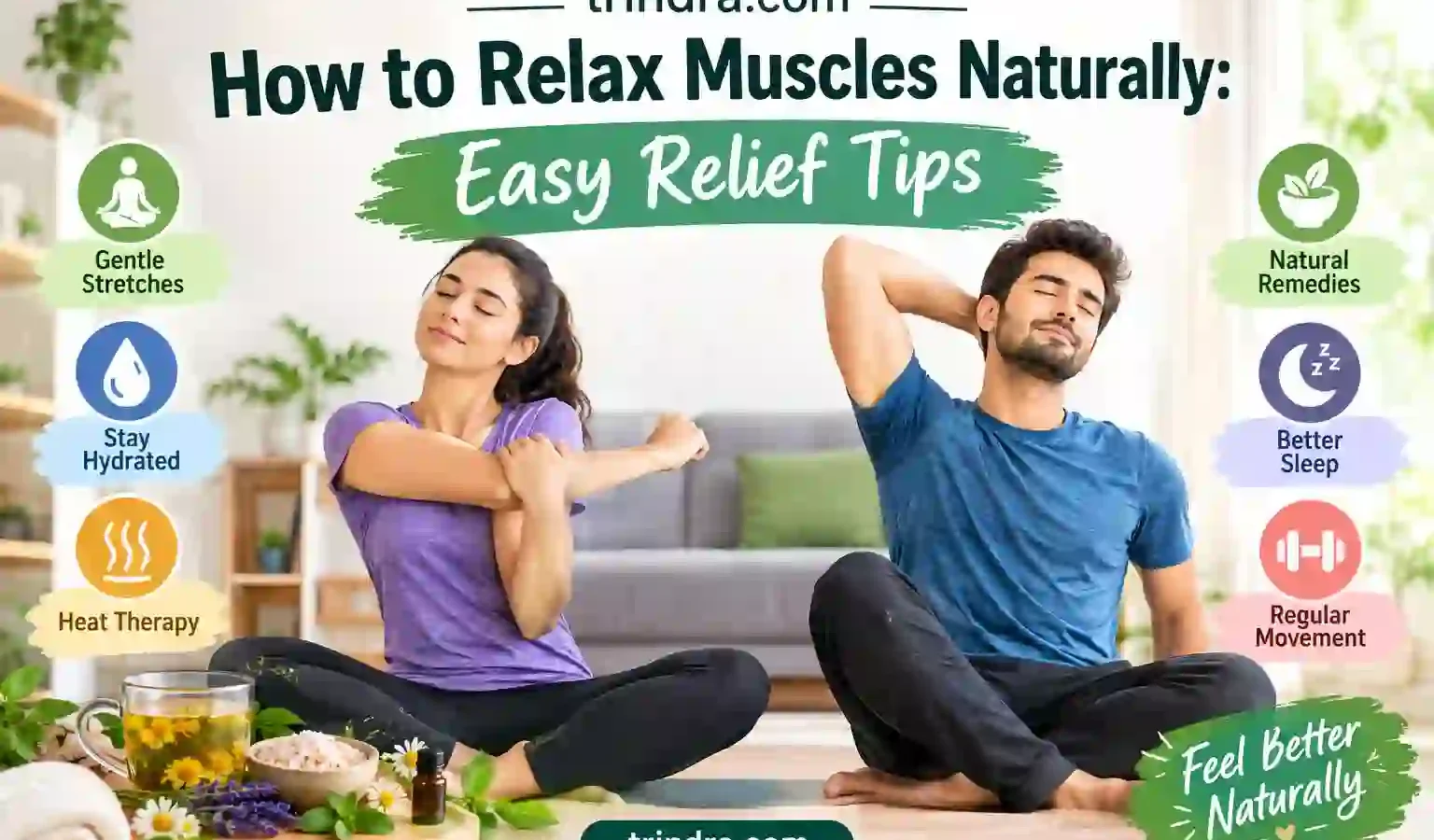
How to Relax Muscles Naturally: Easy Relief Tips
Muscle tightness can make ordinary activities feel uncomfortable. Sitting for long hours, exercising, sleeping in an awkward position, stress, or staying inactive can all contribute to stiff or sore muscles. Fortunately, simple daily habits can often help your body feel more comfortable. Learning how to relax muscles naturally can start with gentle movement, stretching, warmth, rest, hydration, and other practical approaches.
Many people also search for how to relax muscles naturally when they experience tension in their neck, shoulders, back, or legs. The right approach depends on what is causing the discomfort. A recent injury may need different care from general stiffness caused by inactivity. Cleveland Clinic notes that gentle stretching, massage, heat, cold therapy, and rest can all have a role in managing common muscle discomfort.
This guide explains how to relax muscles naturally with simple methods that can fit into a normal routine. It also covers muscle-relaxing drinks, magnesium, menstrual cramps, anxiety-related tension, and the difference between hot and cold baths.
How to Relax Muscles Naturally With Gentle Stretching
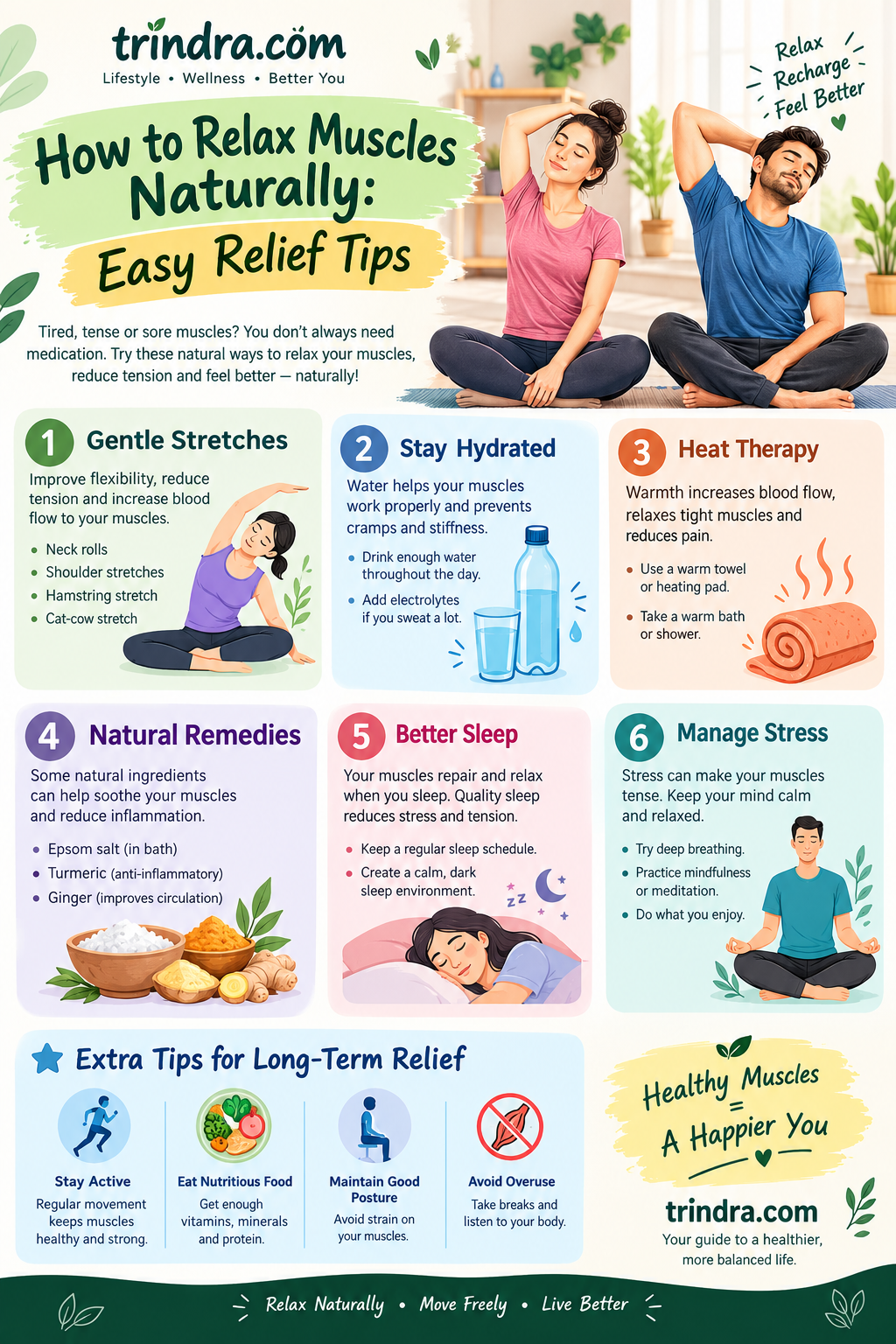
Gentle stretching is one of the simplest ways to work on muscle stiffness. When muscles remain in one position for too long, they may feel tight when you finally move. Slow stretching can encourage movement and help you feel less restricted.
Start with easy movements rather than forcing a muscle into a deep stretch. Hold a comfortable position for a short period and breathe normally. If a stretch causes sharp pain, stop rather than trying to push through it.
Stretching can be especially useful after sitting at a desk, traveling, or completing everyday activities. It can also be included before and after exercise when appropriate. Cleveland Clinic recommends gentle stretching as one option for preventing stiffness while muscles recover.
How to Relax Muscles Naturally With Light Movement
Rest does not always mean staying completely still. Light movement can help you avoid spending long periods in one position. A relaxed walk, gentle mobility exercises, or changing your sitting position throughout the day may help reduce stiffness.
If you spend several hours studying or working at a desk, take regular movement breaks. Roll your shoulders gently, stand up, walk around, and allow your body to change position.
The goal is not intense exercise. Instead, focus on comfortable movement that keeps your muscles from remaining tense for extended periods.
How to Relax Muscles Naturally With Heat and Warm Baths
Warmth can be helpful when muscles feel stiff or tense. Heat may encourage blood flow and help muscles loosen, making movement more comfortable. A warm shower or bath can also provide a relaxing experience after a busy day.
If you choose a bath, keep the water comfortably warm rather than extremely hot. Avoid staying in very hot water for a long time, especially if you feel dizzy or uncomfortable.
Hot Bath or Cold Bath for Sore Muscles?
The choice between heat and cold depends on the situation. Heat is commonly used for general muscle tension and stiffness, while cold therapy can be useful after some recent injuries because it may help reduce swelling and inflammation.
For everyday stiffness, a warm bath may feel more soothing. For a recent injury with swelling, cold therapy may be more appropriate. If you are unsure what caused your pain, avoid repeatedly treating it without understanding the reason.
How to Relax Muscles Naturally When Legs Feel Tight
Tight legs can happen after exercise, long periods of sitting, standing, or simply doing more physical activity than usual. When looking at how to relax muscles naturally in the legs, gentle movement and stretching are good starting points.
Try slowly moving your ankles and knees before standing after a long period of sitting. A gentle calf or thigh stretch may also help if it feels comfortable.
Massage can be another option. Gently massaging a tight area may help reduce the sensation of tension and encourage blood flow. However, avoid pressing hard on an area that is injured, swollen, or unusually painful.
How to Relax Tight Muscles Without Overdoing It
More stretching is not always better. Your muscles need time to recover, particularly after demanding physical activity.
Use slow movements and stop if you experience sharp, increasing, or unusual pain. If stiffness continues despite basic self-care, consider speaking with a healthcare professional to identify the underlying cause.
How to Relax Muscles Naturally With Hydration and Food
Your everyday eating and drinking habits can support general muscle function. Drinking enough fluids is important, particularly when you have been physically active or exposed to warm weather.
A balanced diet can also provide minerals and nutrients that your body needs. Foods such as leafy greens, beans, nuts, seeds, dairy products, fruits, and whole grains can contribute to a varied diet.
How to Relax Muscles Naturally With Magnesium
Magnesium is often discussed in connection with muscle cramps, but supplements are not a guaranteed solution. A Cochrane review found that magnesium supplementation was unlikely to provide a meaningful benefit for idiopathic muscle cramps in older adults, while evidence for pregnancy-related cramps was conflicting.
This means it is better not to assume that taking extra magnesium will automatically solve muscle tightness. If you are considering a supplement, especially if you take medication or have a health condition, talk with a healthcare professional first.
How to Relax Muscles Naturally With a Warm Drink
A warm drink can become part of a calming evening routine. Herbal drinks such as caffeine-free teas may feel soothing, especially when paired with quiet time, comfortable breathing, and gentle stretching.
However, a muscle relaxing tea should not be treated as a medical muscle relaxer. There is a difference between enjoying a warm beverage as part of relaxation and using a product as treatment for persistent muscle pain.
If muscle discomfort is frequent or severe, focus on finding the cause rather than relying only on drinks or home remedies.
Managing Stress-Related Muscle Tension
Stress can affect how your body feels. Some people unconsciously tighten their shoulders, jaw, neck, or other muscles when they feel worried or overwhelmed.
Learning how to relax muscles naturally can therefore include relaxation techniques. Try slow breathing, gentle stretching, a short walk, quiet music, or a few minutes away from screens.
Muscle tension related to stress does not automatically mean that you need a muscle-relaxing medication. Prescription muscle relaxers are different from natural relaxation methods and should only be used according to a healthcare professional’s advice.
Do Muscle Relaxers Help Anxiety?
Muscle relaxer medicines are designed for specific medical situations and are not a general treatment for anxiety. Anxiety can involve both mental and physical symptoms, but medication decisions should be made with a qualified healthcare professional.
For everyday stress-related tension, simple techniques such as breathing exercises, movement, adequate sleep, and relaxation routines may be useful additions to a healthy routine.
How to Relax Muscles Naturally With Gentle Stretching
Menstrual cramps can involve pain and muscle contractions in the lower abdomen. Gentle warmth may feel comforting for some people, and light movement can also be helpful when it feels comfortable.
Using Heat and Warm Baths for Muscle Tension
Cold weather can make some people feel more stiff or uncomfortable, particularly when they move less during winter. The phrase pain in body in winter can describe several different experiences, so the cause matters.
Staying gently active, dressing appropriately for the weather, maintaining regular sleep, and using comfortable warmth may help with general stiffness.
If body pain is persistent, severe, associated with weakness, swelling, fever, numbness, or another concerning symptom, it is better to seek medical advice rather than assuming cold weather is responsible.
Gentle Ways to Ease Tight Leg Muscles
People sometimes search for the best homeopathic muscle relaxer, but homeopathic products should not be assumed to work like clinically established treatments.
If muscle tightness keeps returning, identifying the reason is more useful than continually trying different products. Causes can include overuse, inactivity, posture, injury, stress, or an underlying health condition.
When to Get Help Instead of Using Home Remedies
Home remedies may be reasonable for mild, temporary stiffness. However, persistent or unexplained muscle pain deserves attention.
Seek professional medical advice if your pain is severe, keeps returning, follows a significant injury, or comes with symptoms such as weakness, numbness, major swelling, fever, or difficulty moving normally.
Conclusion
Knowing how to relax muscles naturally can help you build a simple routine around gentle movement, stretching, warmth, rest, hydration, and relaxation. These approaches may be useful for everyday stiffness and mild muscle tension, but they are not a replacement for medical care when symptoms are persistent or unusual.
Take a few minutes today to stretch gently, move your body, and create a relaxing routine. If your muscle discomfort continues or keeps returning, speak with a healthcare professional to understand the underlying cause.
FAQ
1. What is a simple way to relax tight muscles?
Gentle stretching, light movement, massage, and comfortable warmth can help with everyday muscle stiffness. Stop if movement causes sharp or increasing pain.
2. Does a warm bath help sore muscles?
A warm bath may help general muscle tension and stiffness. For some recent injuries with swelling, cold therapy may be more appropriate.
3. Does magnesium relax muscles?
Magnesium is important for normal body function, but evidence does not show a meaningful benefit for preventing idiopathic muscle cramps in older adults.
4. Can stress make muscles feel tight?
Yes. Stress can be associated with physical tension, particularly around areas such as the shoulders, neck, and jaw. Relaxation and gentle movement may help.
5. When should muscle pain be checked by a doctor?
Persistent, severe, unexplained, or unusual pain should be assessed by a healthcare professional, especially when it occurs with weakness, numbness, swelling, fever, or difficulty moving.