
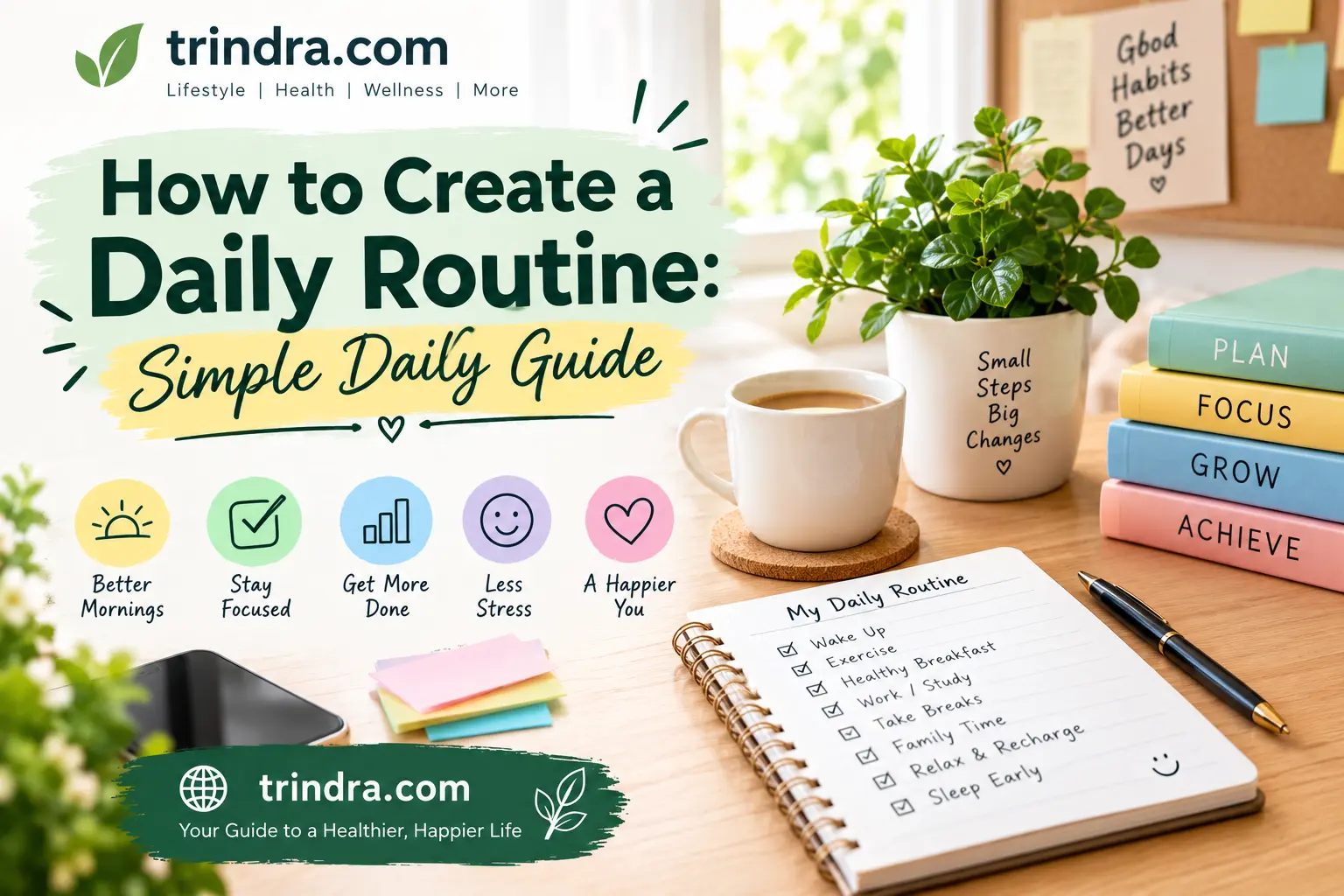
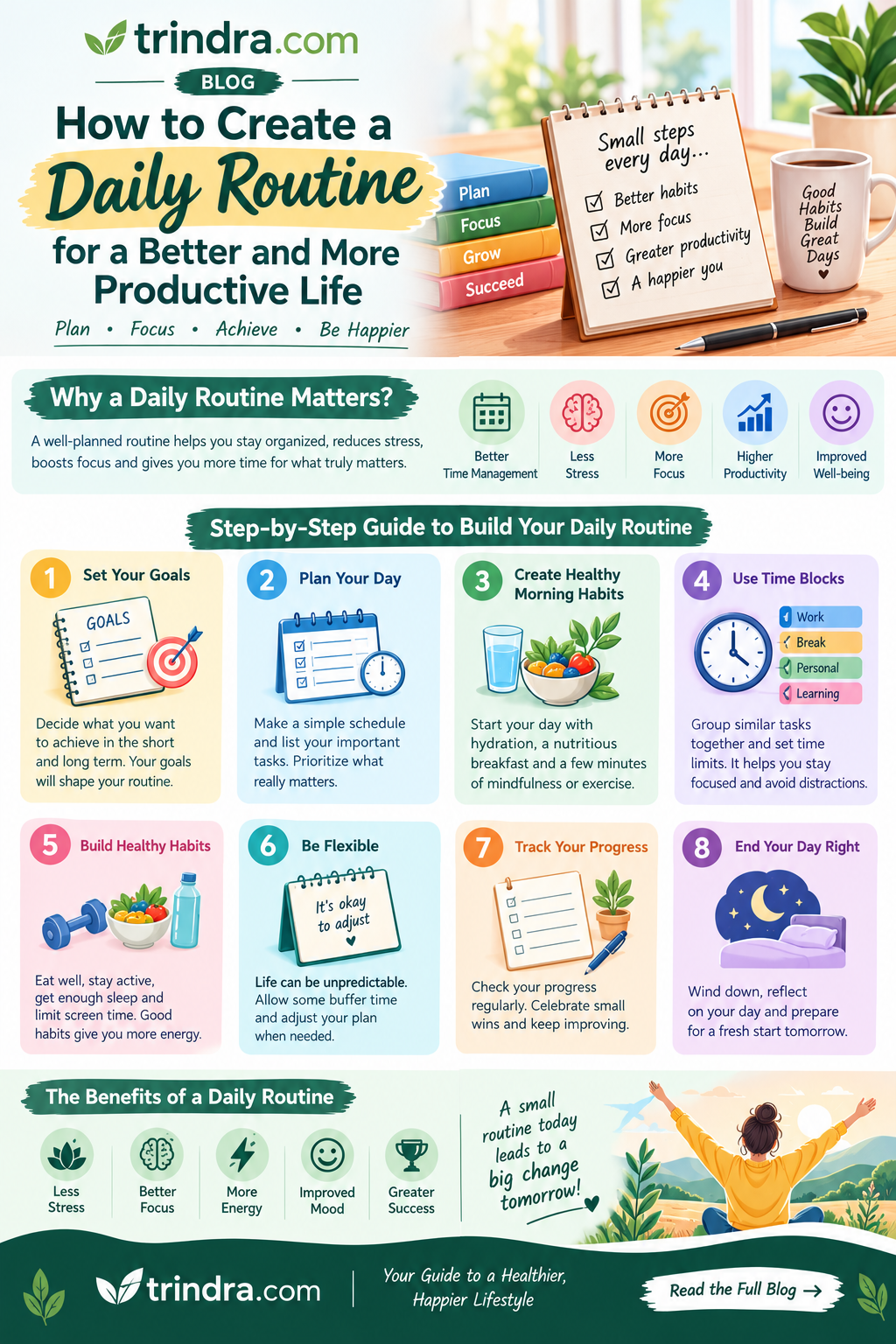
How to Create a Daily Routine for a Better and More Productive Life
Learning how to create a daily routine can make your days feel more organized, focused, and manageable. A good routine gives you a clear idea of what needs to be done without making every hour feel strictly scheduled. From waking up and getting ready in the morning to completing work, studying, relaxing, and preparing for sleep, small habits can create a smoother day.
Many people want a routine but struggle to keep one because they make their plans too complicated. The answer is not to fill every minute with tasks. Instead, focus on a few realistic habits that match your lifestyle and gradually build from there.
Whether you want to become more productive, improve your mornings, or simply feel less rushed, a simple routine can give your day a stronger structure.
Why a Daily Routine Matters
A consistent routine can reduce the number of small decisions you need to make throughout the day. When certain activities become regular habits, you spend less time wondering what to do next.
For example, waking at a similar time, having breakfast, getting ready, and beginning your main task can create a predictable start. The same idea can be applied to evenings by setting aside time for dinner, relaxation, preparation for tomorrow, and sleep.
Start With Your Main Priorities
Before creating a schedule, identify the activities that matter most. These might include school or work, exercise, family responsibilities, personal projects, meals, and rest.
Once your priorities are clear, place them into your day first. Smaller tasks can then fit around them.
This approach makes daily routine planning easier because you are building your schedule around what actually matters instead of filling it with unnecessary activities.
Organize Your Important Tasks
Think about the responsibilities that need your attention every day. Work, study, meals, family time, personal activities, and rest can all become part of your basic structure.
Putting these important activities into your routine first can help you understand how much time is actually available for smaller tasks.
Leave Room for Rest and Flexibility
A routine should support your life rather than control it. Some days will naturally look different, so leave enough flexibility for unexpected responsibilities.
Rest should also have a place in your schedule. A routine that includes only work and responsibilities can quickly become difficult to maintain.
How to Create a Daily Routine That Fits Your Life
The easiest way to learn how to create a daily routine is to start small. Choose a few activities that you want to repeat every day and give them approximate times.
For example, your morning could include waking up, drinking water, washing up, eating breakfast, and preparing for work or study. Your afternoon might include your main responsibilities, a short break, and some movement.
In the evening, you could finish important tasks, prepare your clothes or bag for the next day, spend time with family, and relax before going to bed.
How to Make a Daily Routine for Yourself
When considering how to make a daily routine for yourself, think about what currently makes your day difficult.
If mornings feel rushed, prepare some things the night before. If you often forget tasks, write them down. If you spend too much time on your phone, create specific periods for checking messages instead of doing it constantly.
The best routine solves real problems. It should make your day easier rather than create additional pressure.
Choose Realistic Daily Habits
Do not try to change every part of your day at once. Start with a few habits that are realistic for your lifestyle.
Small actions can become easier to repeat when they are connected to activities you already do regularly.
Build Your Schedule Step by Step
You do not need to copy someone else’s schedule. A routine should fit your responsibilities, energy levels, and personal preferences.
Begin with the most important parts of your day and gradually add other habits when the basic structure feels comfortable.
Build a Better Morning
A strong morning does not need to begin with an extremely early alarm or a complicated list of habits. The goal is to create a calm beginning that helps you transition into the day.
What Should I Do in the Morning?
If you are wondering what should I do in the morning, begin with basic activities. Wake up, wash up, drink water, eat something if you normally have breakfast, and give yourself enough time to get ready.
A few minutes of stretching, walking, reading, or quiet reflection can also be useful if you enjoy these activities.
Get Ready in the Morning Without Rushing
Giving yourself enough preparation time can make mornings much easier. Decide what you need before leaving home and prepare important items the night before.
For example, you can choose your clothes, pack your bag, organize your workspace, or make a simple breakfast plan ahead of time.
These small steps reduce unnecessary decisions and leave more time for the things you actually enjoy.
Create a Calm Start to Your Day
Some people like to roll around in the morning for a few extra minutes before getting out of bed. That can feel comfortable, but try not to let it turn into a long delay that makes you rush later.
A calm start does not have to be complicated. Give yourself enough time to wake up, get ready, and move into your main responsibilities without unnecessary pressure.
Try a One Hour Rule Morning Routine
The one hour rule morning routine is a useful framework for people who prefer having a defined morning structure. Instead of trying to complete dozens of activities, divide an hour into a few practical sections.
Divide Your Morning Into Simple Steps
You might spend the first part waking up and getting ready, another portion eating breakfast, and the remaining time preparing for your main responsibility.
Breaking the hour into simple sections can make the morning easier to understand without requiring a complicated schedule.
Plan Your First Hour
Think about the activities that genuinely need to happen during your first hour. Getting ready, eating, preparing your belongings, and reviewing your plans can all be included depending on your lifestyle.
Make the Routine Work for You
The exact structure does not matter as much as consistency. If one hour is unrealistic for your lifestyle, create a shorter or longer routine that works better.
The purpose of the framework is to provide structure, not to force everyone into exactly the same schedule.
Personalize Your Morning Style
Your routine can also reflect your personality. Someone may enjoy a quiet and simple morning, while another person prefers music, exercise, journaling, or getting ready while watching lifestyle content.
Create a Preppy Morning Routine
A preppy morning routine, for example, might focus on an organized appearance, neat preparation, breakfast, and planning the day ahead.
The important thing is not the label but whether the habits fit naturally into your lifestyle.
Morning With Me: Turn Inspiration Into Your Own Routine
You may see “morning with me” videos and other routine content online. These videos can provide ideas, but remember that someone else’s schedule may not fit your life.
Use inspiration as a starting point rather than a strict template. Choose the habits that are genuinely useful and ignore anything that does not suit your responsibilities.
Choose Habits You Enjoy
Searches such as morning routine dailymotion or similar routine videos can provide ideas, but real progress comes from practicing habits consistently.
Choose activities that are useful and enjoyable enough to repeat. A routine is easier to maintain when it feels realistic rather than forced.
Create an Evening Routine Too
A good day often starts with a good evening. Preparing for tomorrow can make your next morning less stressful.
Prepare for the Next Day
Spend a few minutes checking your schedule, preparing important items, and deciding what needs attention first.
Preparing clothes, bags, work materials, or other essentials can reduce the number of things you need to think about the next morning.
Relax Before Bed
You can also reduce screen time before bed if it interferes with your sleep. Give yourself some quiet time to transition away from the busy parts of the day.
Keep Your Evening Simple
Your evening routine does not need to be complicated. A simple sequence can help signal that the busy part of the day is ending.
Focus on a few useful activities instead of creating another long list that becomes difficult to follow.
Keep Your Routine Flexible
One of the biggest mistakes people make is expecting every day to go perfectly. Unexpected events, changes in responsibilities, tiredness, and social plans can affect your schedule.
Expect Changes in Your Schedule
Some days will not follow your normal routine. Work, school, appointments, family responsibilities, or social plans can change the structure of your day.
Instead of viewing these changes as failures, allow your routine to adapt.
Adjust Your Routine When Needed
Instead of abandoning the entire routine when something changes, return to your key habits when possible.
For example, if you miss your usual morning workout, you can take a short walk later. If you do not complete every task on your list, move the less important ones to another day.
Focus on Consistency
Flexibility makes a routine much easier to maintain over time. You do not need to follow the exact same schedule every day to benefit from having structure.
The goal is to create habits that continue to support you even when your schedule changes.
Conclusion
Knowing how to create a daily routine is less about creating a perfect schedule and more about developing habits that make your life easier. Start with your priorities, create a manageable morning, organize important tasks, and leave room for rest and unexpected changes.
A useful routine should feel realistic rather than restrictive. Give yourself time to adjust, keep the structure simple, and change parts of the schedule when your needs change.
With consistent daily routine planning, small habits can gradually become a natural part of your day.
Start today by choosing just three habits you want to repeat tomorrow. Keep them simple, give yourself enough time, and gradually build your routine as those habits become easier.
FAQ
How Do I Start Creating a Daily Routine?
Begin by identifying your most important daily responsibilities. Add a few simple habits around them and gradually build your schedule as you become comfortable.
How Long Does It Take to Build a Routine?
There is no fixed timeline. Some habits may feel natural quickly, while others require more practice. Consistency is more important than trying to change everything at once.
Should My Daily Routine Be the Same Every Day?
Not necessarily. Keep a few core habits consistent while allowing flexibility for weekends, work, school, appointments, and unexpected events.
What Is a Good Morning Routine?
A good morning routine should help you start your day without unnecessary stress. Getting ready, eating, preparing for your responsibilities, and including an enjoyable activity can all be useful.