Goals for Personal Development and Simple Ways to Grow in Life
Setting meaningful goals for personal development is an effective way to improve your skills, build confidence, and create a more organized lifestyle. Personal growth is not about changing everything overnight. Instead, it involves making small improvements that gradually support your ambitions, relationships, and everyday responsibilities.
Whether you want to develop better habits, improve communication, or learn something new, having a clear direction can make your efforts more meaningful. Moreover, personal objectives help you recognize your strengths and identify areas where you can improve.
In this guide, you will explore practical personal growth goals, SMART planning techniques, career development ideas, and simple exercises. By following realistic steps, you can build positive routines and continue improving at a comfortable pace.
Understanding Goals for Personal Development and Their Importance
Personal development involves improving your knowledge, abilities, habits, and mindset. It covers different aspects of life, including education, relationships, career growth, and personal well-being.
Meaning of Personal Growth Objectives
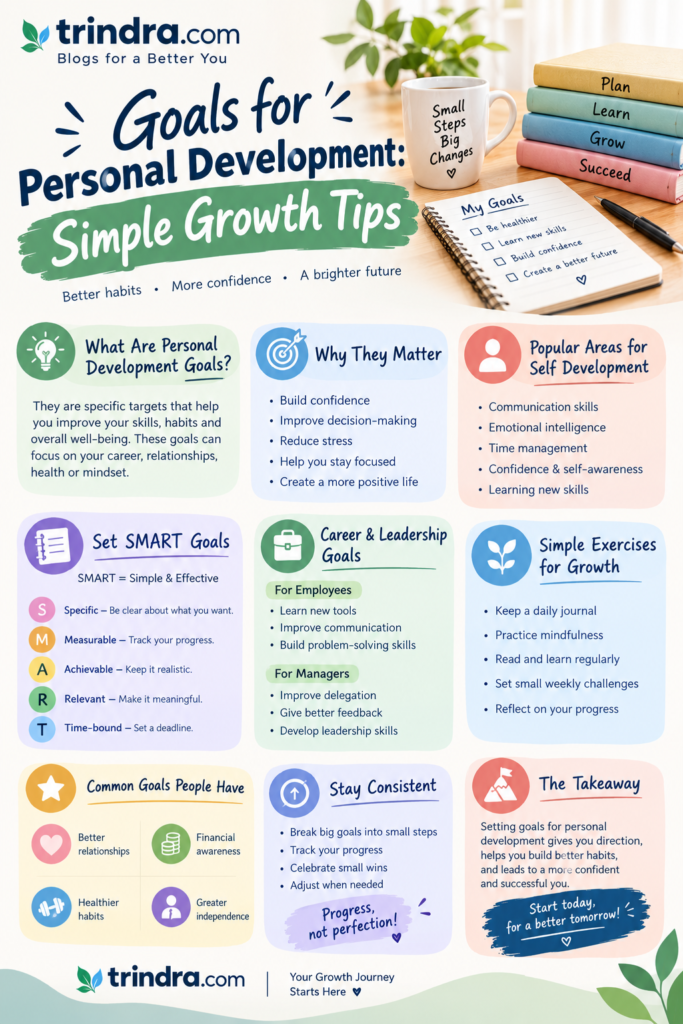
Personal growth objectives are specific targets that help you become more capable and confident. For example, learning a new skill, improving time management, and developing communication abilities are useful development objectives.
Furthermore, these goals provide direction when you want to make positive changes. Rather than relying only on motivation, you can follow a clear plan and measure your progress.
Benefits of Setting Clear Personal Goals
Clear objectives can make everyday responsibilities easier to manage. They also encourage you to focus on activities that support your long-term interests.
Some important benefits include:
- Improved confidence: Regular learning helps you recognize your abilities.
- Better organization: Planning makes daily responsibilities more manageable.
- Stronger communication: Practicing respectful conversations improves interactions.
- Personal awareness: Reflection helps you understand your strengths.
- Consistent motivation: Small achievements encourage continued effort.
As a result, setting realistic targets can support both personal and professional development.
How Personal Development Improves Everyday Life
Personal growth is not limited to professional achievements. It also involves making thoughtful decisions, developing positive relationships, and managing responsibilities.
For instance, creating a daily schedule may improve organization. Similarly, practicing active listening can strengthen communication. Over time, these small improvements can contribute to a more balanced lifestyle.
Practical Goals for Personal Development in Everyday Life
Choosing useful goals for personal development becomes easier when you divide them into different areas. This approach allows you to focus on one improvement at a time without feeling overwhelmed.
Building Confidence and Self-Awareness
Confidence develops through preparation, practice, and recognizing your abilities. Meanwhile, self-awareness helps you understand your interests, values, and areas for improvement.
You can strengthen these qualities by:
- Recognizing your personal strengths.
- Practicing positive self-talk.
- Learning from everyday experiences.
- Trying new educational activities.
- Appreciating small achievements.
Additionally, keeping a journal can help you understand your progress and identify useful lessons.
Improving Communication and Social Skills
Communication is important in education, friendships, and professional environments. It involves expressing ideas clearly while listening carefully to others.
For example, you can practice active listening, organize your thoughts before speaking, and ask for clarification when needed. Consequently, conversations can become more respectful and productive.
Developing Better Time Management Habits
Time management helps you balance responsibilities, learning, and personal interests. However, an effective schedule should remain realistic rather than overly complicated.
Start by identifying important tasks and arranging them according to priority. Then, divide larger activities into smaller steps. In addition, include regular breaks so your routine remains manageable.
Strengthening Emotional Intelligence
Emotional intelligence involves recognizing emotions, understanding different perspectives, and responding thoughtfully.
You can improve this ability through reflection, journaling, and respectful conversations. Moreover, taking a moment before responding to a difficult situation can help you make more thoughtful decisions.
SMART Goals for Personal Development and Meaningful Growth
The SMART method provides a structured approach to goals for personal development. It helps transform broad intentions into practical objectives that are easier to understand and follow.
Creating Specific Personal Objectives
A specific objective clearly explains what you want to achieve.
For example, instead of writing, “I want to improve my skills,” choose a clear target such as learning basic graphic design or improving writing abilities.
This clarity makes it easier to identify the activities required for progress.
Measuring Your Personal Growth Progress
Measurable objectives include a way to track improvement. You might complete three learning sessions each week or finish a particular course module.
Furthermore, keeping a checklist or progress journal allows you to review completed activities. As a result, you can identify what is working and adjust your plan when necessary.
Setting Achievable and Realistic Targets
Realistic objectives should match your current responsibilities, available time, and resources. Although ambitious plans can feel exciting, extremely difficult targets may become frustrating.
Therefore, begin with manageable steps and gradually increase the challenge as your skills develop.
Choosing Relevant Development Goals
Your objectives should connect with your interests, values, and future direction. For instance, someone interested in writing may focus on communication and research skills.
Similarly, a person preparing for professional responsibilities may prioritize teamwork and organization.
Creating Time-Bound Personal Growth Plans
A reasonable deadline provides structure and helps you stay focused. Set a timeframe, review your progress, and make adjustments when circumstances change.
However, remember that deadlines should encourage consistency rather than create unnecessary pressure.
Career and Leadership Development Goals
Professional development focuses on improving knowledge, workplace abilities, and collaboration. These objectives can support students, employees, and people preparing for leadership responsibilities.
Professional Development Goals for Employees
Employees can focus on practical skills that improve their daily performance.
Useful examples include:
- Learning new workplace software.
- Improving written communication.
- Developing problem-solving abilities.
- Organizing responsibilities more effectively.
- Participating in relevant training.
In addition, asking for constructive feedback can help identify areas that need further practice.
Personal Development Goals for Managers
Managers can develop leadership abilities that support communication and teamwork.
For example, learning to delegate responsibilities, provide useful feedback, and resolve disagreements respectfully can improve professional interactions.
Moreover, regular reflection can help managers understand their communication style and identify opportunities for improvement.
Building Leadership and Decision-Making Skills
Leadership develops through responsibility, collaboration, and continuous learning. It is not limited to holding a particular position.
You can strengthen leadership abilities by listening to others, communicating expectations clearly, and approaching challenges thoughtfully.
Creating a Professional Learning Plan
A professional learning plan should include a skill to develop, suitable learning resources, practice activities, and a review date.
For instance, someone improving presentation skills may study communication techniques and practice short presentations. Consequently, learning becomes more organized and easier to evaluate.
Simple Personal Growth Exercises for Everyday Improvement
Consistent practice can turn goals for personal development into useful everyday habits. Fortunately, you do not need an expensive course or complicated system to begin.
Daily Journaling for Self-Awareness
Writing a few lines about your day can help you understand your experiences.
You may record something you learned, an achievement you appreciate, and one area you want to improve. Over time, these notes can reveal useful patterns in your habits and decisions.
Reading and Learning New Skills
Books, educational articles, and structured courses introduce new knowledge and ideas.
Choose subjects that match your interests and current objectives. Additionally, applying what you learn through small activities can make the information more meaningful.
Practicing Mindfulness and Reflection
Mindfulness encourages attention to the present moment. Quiet reflection, simple breathing exercises, and short breaks can help you approach daily responsibilities with greater awareness.
Similarly, reviewing your reactions after a challenging experience can provide valuable lessons.
Setting Weekly Personal Growth Challenges
Choose one manageable challenge each week. For example, organize your study area, practice a skill, or complete an unfinished task.
These activities create opportunities for improvement without adding unnecessary pressure.
Reviewing Your Development Progress
Set aside time to review your completed activities and identify areas that need adjustment.
Furthermore, recognize small achievements instead of focusing only on unfinished tasks. This approach can help you remain motivated while developing better routines.
Common Personal Development Goals for a Better Lifestyle
People choose different objectives according to their interests, responsibilities, and circumstances. Therefore, your priorities may change as you gain experience and learn more about yourself.
Improving Relationships and Communication
Respectful conversations, empathy, and meaningful time with others can strengthen relationships.
For example, listening without interruption and expressing appreciation can improve everyday interactions.
Developing Healthy Daily Habits
Regular movement, balanced routines, sufficient rest, and enjoyable activities can support overall well-being.
Rather than making several changes simultaneously, introduce manageable habits and build consistency gradually.
Building Financial Awareness
Understanding basic budgeting, tracking spending, and planning savings can encourage responsible financial decisions.
In addition, learning about financial concepts can help you become more informed about everyday money management.
Becoming More Independent
Developing decision-making, organization, and problem-solving abilities can help you manage responsibilities more confidently.
For instance, planning your schedule and completing suitable everyday tasks can encourage responsibility.
Continuing Education and Lifelong Learning
Learning does not end with formal education. Exploring new subjects, practicing useful skills, and reading regularly can support lifelong development.
Moreover, remaining open to new ideas can help you adapt to changing opportunities.
Staying Consistent With Personal Development Goals
Progress often takes time. Although motivation may change from day to day, simple routines can help you continue working toward meaningful improvements.
Breaking Large Goals Into Smaller Steps
A large objective may feel difficult when viewed as one task. Instead, divide it into smaller activities that can be completed gradually.
For example, learning a new skill can begin with short practice sessions and simple exercises.
Creating a Simple Progress Tracker
Use a notebook, calendar, or checklist to record completed activities. This visual record can help you notice consistency and understand where adjustments are needed.
Learning From Setbacks and Challenges
Plans sometimes require changes. However, a missed target does not mean that all progress has been lost.
Identify what made the task difficult and choose a more practical next step. In this way, challenges can become opportunities for learning.
Celebrating Small Personal Achievements
Recognizing progress can help maintain motivation. Completing a lesson, improving a habit, or managing a responsibility independently are meaningful milestones.
Therefore, appreciate your efforts while continuing to learn and improve.
Conclusion
Meaningful growth begins with understanding your priorities and taking realistic action. Goals for personal development can help you strengthen confidence, improve communication, develop useful habits, and build professional abilities.
Start with objectives that matter to you, create a manageable plan, and review your progress regularly. Furthermore, remember that personal development is a continuous process rather than a race toward perfection.
Choose one small improvement today and build your progress step by step. Explore more practical lifestyle and self-improvement guides at trindra.com.
Frequently Asked Questions
What Are Personal Development Goals?
They are specific objectives that help improve skills, knowledge, habits, confidence, and different areas of everyday life.
What Are Some Common Examples?
Examples include improving communication, managing time, learning new skills, developing confidence, and building better routines.
How Does the SMART Method Support Personal Growth?
It makes objectives specific, measurable, achievable, relevant, and time-bound, helping people organize their efforts.
How Can Personal Growth Become a Daily Habit?
Start with simple activities such as journaling, reading, planning tasks, and reviewing progress regularly.
Call to Action
Choose one small improvement today and build your progress step by step. Explore more practical lifestyle and self-improvement guides at trindra.com.